The journey of legendary actor Bruce Willis and his family through the challenges of frontotemporal dementia has deeply moved fans around the world. Known for decades as a Hollywood action icon, Willis now faces a different kind of battle—one that involves patience, care, and the unwavering support of those closest to him. His wife, Emma Heming Willis, has openly shared the family’s experience, helping the public understand the realities of living with a progressive neurological illness.
Recently, Emma revealed that the family made the difficult decision to transition Bruce into a specialized professional care facility. She described the choice as one of the hardest decisions she has faced, but also one made with love and practicality. Frontotemporal dementia, often referred to as FTD, gradually affects areas of the brain responsible for behavior, personality, and language. As the condition progresses, managing care at home can become increasingly complex, even for families who are deeply devoted to providing support themselves.
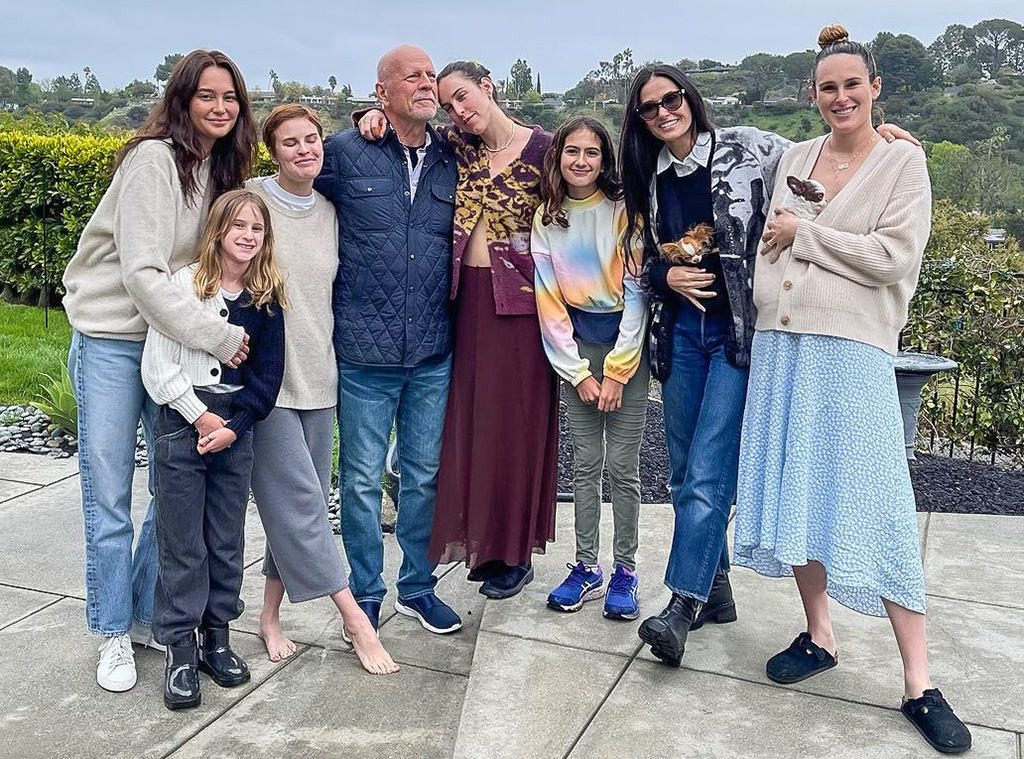
Despite the challenges, Emma has emphasized that Bruce’s presence and personality still shine through in many ways. While his ability to communicate verbally has declined, the emotional connection between him and his family remains strong. Through gestures, shared routines, and quiet moments together, they continue to maintain meaningful connections. Emma has often said that even though words may fade, the love within their family remains powerful and unmistakable.
The family also benefits from a strong support network that includes Bruce’s former wife, Demi Moore, and their three daughters—Rumer, Scout, and Tallulah. Along with Emma and Bruce’s younger daughters, Mabel and Evelyn, this extended family has created a supportive environment centered on compassion and unity. Their approach demonstrates how a blended family can come together to provide comfort and stability during life’s most difficult chapters.
By speaking openly about their journey, Emma Heming Willis has helped bring attention to the broader challenges faced by families caring for loved ones with dementia. Her honesty encourages others to seek support when needed and reminds people that professional care can be a compassionate choice rather than a sign of giving up. Through resilience, love, and transparency, the Willis family continues to inspire many who are navigating similar experiences around the world.