Hachiko was born in November 1923 in the city of Odate in Akita prefecture, the original home of Akitas.
A large-sized Japanese dog, the Akita is one of the country’s oldest and most popular breeds. Designated by the Japanese government as a national icon in 1931, they were once trained to hunt animals like wild boar and elk.
“Akita dogs are calm, sincere, intelligent, and brave [and] obedient to their masters,” said Eietsu Sakuraba, author of an English language children’s book about Hachiko. “On the other hand, it also has a stubborn personality and is wary of anyone other than its master.”
The year Hachiko was born, Hidesaburo Ueno, a renowned agricultural professor and a dog lover, asked a student to find him an Akita puppy.
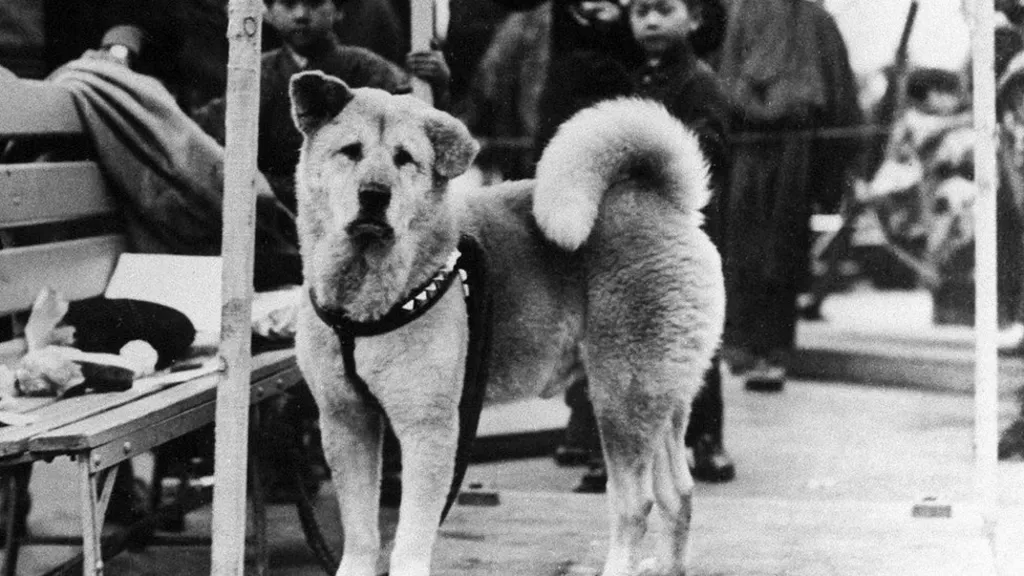
After a gruelling train journey, the puppy arrived at the Ueno residence in Shibuya district on 15 January 1924, where it was initially thought dead. According to Hachiko’s biographer, Prof Mayumi Itoh, Ueno and his wife Yae nursed him back to health over the next six months.
Ueno named him Hachi, or eight in Japanese. Ko is an honorific bestowed by Ueno’s students.
The long wait
Ueno took a train to work several times a week. He was accompanied to Shibuya station by his three dogs, including Hachiko. The trio would then wait there for his return in the evening.
On 21 May 1925, Ueno, then 53, died of a cerebral hemorrhage. Hachiko had been with him for just 16 months.
“While people were attending the wake, Hachi smelled Dr Ueno from the house and went inside the living room. He crawled under the coffin and refused to move,” writes Prof Itoh.
Hachiko spent the next few months with different families outside Shibuya but eventually, in the summer of 1925, he ended up with Ueno’s gardener Kikusaburo Kobayashi.
Having returned to the area where his late master lived, Hachiko soon resumed his daily commute to the station, rain or shine.
“In the evening, Hachi stood on four legs at the ticket gate and looked at each passenger as if he were looking for someone,” writes Prof Itoh. Station employees initially saw him as a nuisance. Yakitori vendors would pour water on him and little boys bullied and hit him.
However, he gained nationwide fame after Japanese daily Tokyo Asahi Shimbun wrote about him in October 1932.
The station received donations of food for Hachiko each day, while visitors came from far and wide to see him. Poems and haikus were written about him. A fundraising event in 1934 to make a statue of him reportedly drew a crowd of 3,000.
Hachiko’s eventual death on 8 March 1935 made the front page of many newspapers. At his funeral, Buddhist monks offered prayers for him and dignitaries read eulogies. Thousands visited his statue in the following days.
“In retrospect, I feel that he knew that Dr Ueno would not come back, but he kept waiting – Hachiko taught us the value of keeping faith in someone,” wrote Takeshi Okamoto in a newspaper article in 1982. As a high school student, he had seen Hachiko at the station daily.
Remembering Hachiko
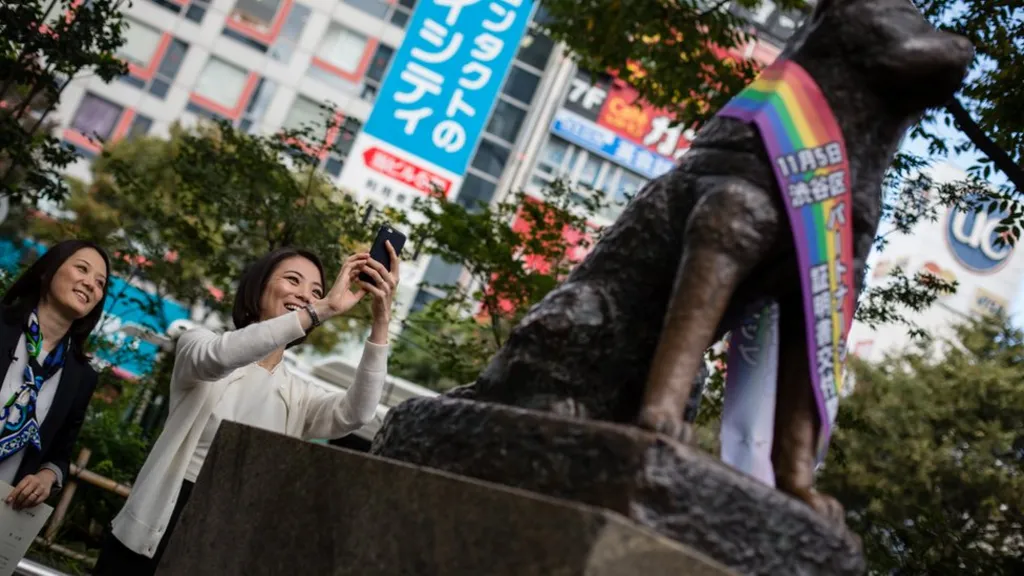
Every year on 8 April, a memorial service for Hachiko is held outside Shibuya Station. His statue is often decorated with scarves, Santa hats and, most recently, a surgical mask.
His mount is on display at the National Museum of Nature and Science in Tokyo. Some of his remains are interred at the Aoyama Cemetery, alongside Ueno and Yae. Statues of him have also been cast in Odate, Ueno’s hometown Hisai, the University of Tokyo and Rhode Island, the American setting for the 2009 movie.
Odate also has a series of events lined up this year for his 100th birthday.
Will the world’s most loyal dog still be celebrated a century from now? Prof Yano says yes because she believes the “heroism of Hachiko” is not defined by any particular period – rather it is timeless.
Mr Sakuraba is equally optimistic. “Even 100 years from now, this unconditional, devoted love will remain unchanged, and the story of Hachiko will live on forever.”