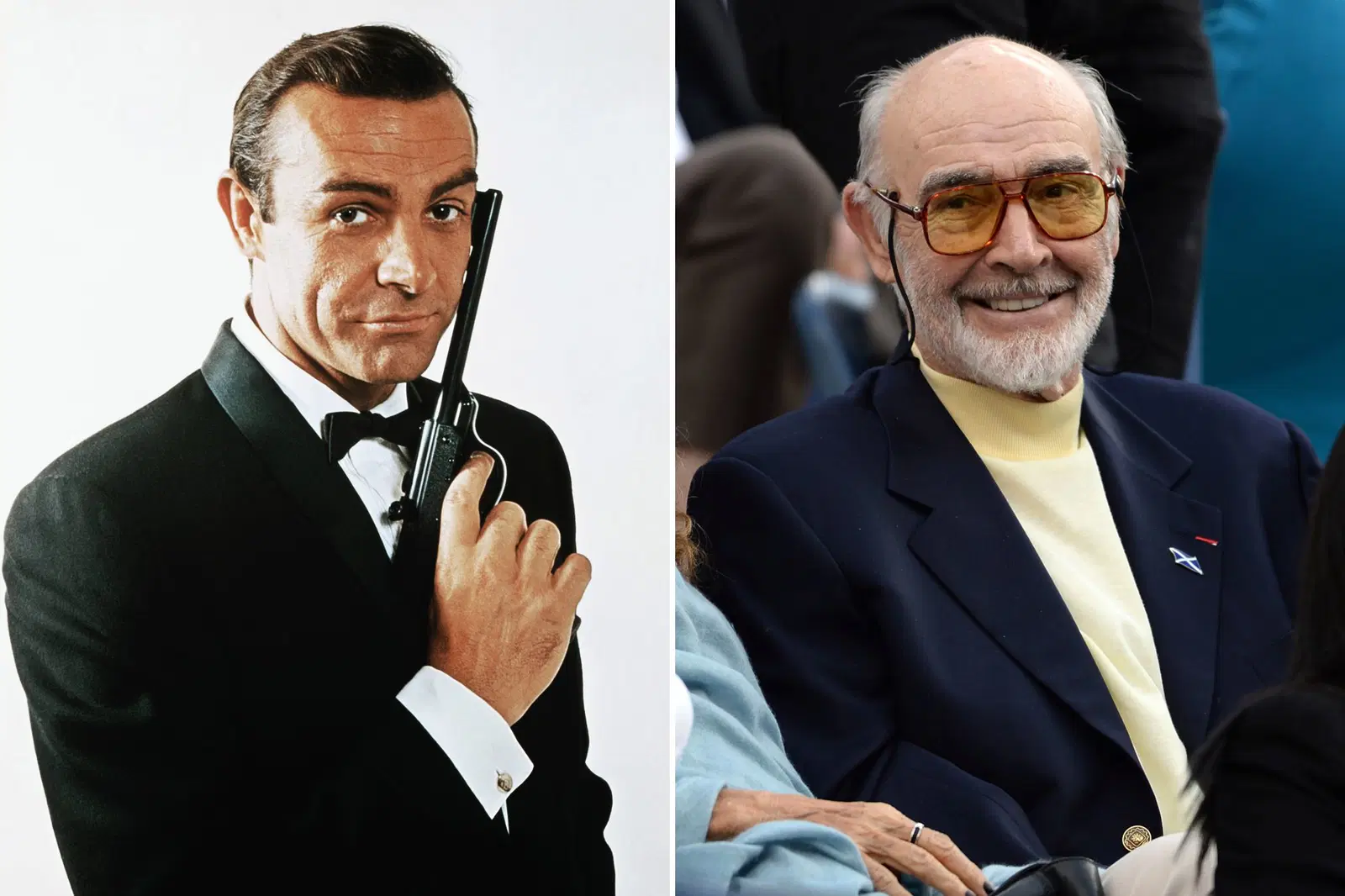
Sean Connery Remembered as a Defining Force in Global Cinema
Sir Sean Connery, one of the most recognizable actors in film history, died at the age of 90 in the Bahamas. He passed away peacefully in his sleep after being “unwell for some time,” with members of his family gathered near him in Nassau during his final hours.
His death marked the loss of a performer whose work shaped generations of moviegoers. Across seven decades in cinema, Connery built a legacy that stretched far beyond a single role, even though he remained forever linked to the first screen portrayal of James Bond.
He was widely admired for his commanding presence, unmistakable voice, and natural charisma. Those qualities helped turn him into one of the most influential leading men of his era and secured his place as a major figure in both British and international film.
Early Years in Edinburgh
Sean Connery was born in 1930 in Fountainbridge, Edinburgh, Scotland. His upbringing was rooted in a working-class household, where discipline, resilience, and hard work were part of daily life.
His father worked as a lorry driver and factory laborer, while his mother took on a range of jobs, including cleaning work, to help support the family. Those early circumstances exposed Connery to hardship from a young age and helped shape the determination that later defined his public life.
He left school at 13 and entered the workforce early. Over time, he held several jobs, including milkman, builder, lifeguard, and truck driver.
Those experiences gave him a grounded quality that remained visible even after he became an international star. The toughness and discipline of those years also contributed to the physical confidence that became one of his most distinctive on-screen traits.
At the same time, he began developing interests that would eventually point him toward entertainment. He took part in amateur performances and also pursued bodybuilding, building the strong physical image that later became central to many of his film roles.
Finding a Way Into Film
Connery’s path into acting did not begin with instant fame. Instead, it developed gradually, as he moved from ordinary working life toward public performance.
His early appearances in local theater and his growing visibility through bodybuilding helped him attract professional attention. That shift opened the door to screen work and placed him on a path that would soon transform his life.
His first significant film role came in 1957 in the British gangster picture No Road Back. Though the part was not large, it offered an early glimpse of the qualities that would soon define his career.
Even in those early appearances, he stood out for his stoic manner, strong screen presence, and understated confidence. He brought a sense of authority that suggested a larger career was within reach.
That breakthrough arrived only a few years later when he was chosen to play James Bond in Dr. No in 1962. The decision would change not only Connery’s future, but also the future of popular cinema.
Becoming the First James Bond
When Connery was cast as Bond, the character was already well known through Ian Fleming’s novels. Even so, the choice drew doubts in some quarters.
His Scottish accent, working-class background, and distance from traditional Hollywood polish led some observers to question whether he was the right fit for the polished British spy. Connery answered those doubts by reshaping the role in a way that made it entirely his own.
He gave Bond a mixture of danger, intelligence, wit, and charm. That balance turned the secret agent into a global film phenomenon and helped establish a model for the modern blockbuster.
Connery went on to appear in seven Bond films: Dr. No, From Russia with Love, Goldfinger, Thunderball, You Only Live Twice, Diamonds Are Forever, and the unofficial Never Say Never Again in 1983.
Each performance strengthened his hold on the character in the public imagination. For many viewers, Connery became the definitive Bond, the version against which every later actor in the role would be judged.
His interpretation blended sophistication with ruthlessness. He could appear elegant and controlled in one moment, then forceful and dangerous in the next, giving Bond a layered appeal that resonated with audiences around the world.
Goldfinger, released in 1964, became one of the most celebrated entries in the series. Connery’s ease with one-liners, action scenes, and scenes of tension helped elevate the film and reinforced his reputation as a star of unusual magnetism.
Though some elements of the early Bond era have since been viewed as dated, Connery’s performance remained central to the franchise’s cultural power. He captured the imagination of audiences with a style that felt both effortless and commanding.
The Qualities That Set Him Apart
Several traits helped explain why Connery became such a lasting screen presence. His physicality gave him immediate credibility in action-oriented roles and made him convincing in parts that required force, discipline, and confidence.
His voice was equally important. Deep, resonant, and instantly recognizable, it gave weight to even simple lines and became one of the defining signatures of his career.
He also carried a kind of charisma that was difficult to imitate. Connery could combine seriousness, humor, and intensity in the same performance, making his characters feel both larger than life and grounded at the same time.
Those qualities made him effective not only in Bond films, but across dramas, thrillers, historical stories, fantasy adventures, and action cinema. He possessed the rare ability to fit comfortably into very different genres without losing his identity as a performer.
Building a Career Beyond Bond
Although Bond made him internationally famous, Connery did not allow the role to define the limits of his career. He chose projects that gave him room to expand his range and prove that he could succeed outside the franchise that had made him a household name.
One early example was Marnie in 1964, directed by Alfred Hitchcock. The film gave him an opportunity to demonstrate dramatic depth and helped show that he could bring more than action-star appeal to the screen.
His background remained part of what made those performances convincing. The discipline formed in working-class Edinburgh and the influence of military service gave many of his characters a grounded authority that audiences continued to trust.
Even when he played polished or powerful figures, there was often a feeling that he was drawing from something real and lived-in. That quality allowed him to remain credible in roles that demanded both intelligence and force.
As the years passed, Connery continued to take on films that reinforced his range. He worked in thrillers, historical stories, adventure films, and dramatic pieces, steadily proving that his career would endure long after Bond.
Major Roles and Lasting Performances
Among the most celebrated films of his later career was The Untouchables in 1987. In that film, Connery played Jim Malone, an Irish-American police officer who guides Eliot Ness in the struggle against Al Capone.
His performance was praised for its authority, restraint, and sharp wit. It earned him the Academy Award for Best Supporting Actor in 1988, one of the highest honors of his career.
He followed that success with several performances that reinforced his standing as a major star across generations. In Indiana Jones and the Last Crusade in 1989, he played Henry Jones Sr., bringing warmth, humor, and emotional depth to the role of Indiana Jones’s father.
His on-screen dynamic with Harrison Ford became one of the film’s most memorable elements. The performance added another dimension to Connery’s career by showing how naturally he could blend authority with comedy and affection.
In The Hunt for Red October in 1990, he portrayed Soviet submarine captain Marko Ramius. The role depended on intelligence, control, and emotional nuance, all qualities that Connery delivered with confidence.
He also appeared in Highlander in 1986 as Juan Sánchez-Villalobos Ramírez, a mentor figure whose presence added weight to the story’s fantasy elements. In The Rock in 1996, he played John Mason, a former British SAS operative, again drawing on the blend of physicality and intelligence that remained central to his screen identity.
Other performances, including his work in The Name of the Rose, The Russia House, and Medicine Man, further demonstrated his versatility. These roles showed his ability to play men of intellect and authority without losing the human warmth that made him compelling to watch.
Awards, Honors, and International Respect
Connery’s achievements were recognized throughout his career. In addition to his Academy Award win for The Untouchables, he received multiple BAFTA nominations and Golden Globe recognition for both Bond films and dramatic work.
His career reached another symbolic milestone in 2000, when he was knighted by Queen Elizabeth II at Holyrood Palace for his services to film. That honor reflected the scale of his contribution to the arts and the depth of his global reputation.
By that stage, Connery was no longer simply a successful actor. He had become a cultural figure whose work was recognized across continents and across generations.
His influence was evident in the respect shown by colleagues and filmmakers who worked with him or followed in his footsteps. He was admired not only for what he did on screen, but for the professionalism and steadiness he brought to the industry.
Family, Identity, and Personal Life
Outside film, Connery remained closely tied to his personal life and background. He was married to Micheline Roquebrune, a French-Moroccan artist, and their long partnership became an important part of his life story.
He had two sons, Jason and Stephane Connery. Family remained central to him, and that closeness was reflected in the fact that relatives were present in the Bahamas during his final hours.
Even at the height of international fame, Connery remained deeply connected to Scotland. He maintained a strong sense of national identity and was a committed supporter of Scottish independence.
That connection to his homeland remained with him throughout his life. His public image may have been global, but his sense of self stayed closely linked to his Scottish roots.
How the Film World Remembered Him
Following the news of his death, tributes from the film world reflected both admiration and affection. Daniel Craig described him as “one of the true greats of cinema” and said, “He defined an era and a style… He helped create the modern blockbuster. He will continue to influence actors and filmmakers alike for years to come.”
Dame Shirley Bassey also paid tribute, saying, “I’m incredibly saddened… He was a wonderful person, a true gentleman and we will be forever connected by Bond.” Her words captured the strong link between Connery and one of cinema’s most enduring franchises.
George Lucas reflected on Connery’s work in Indiana Jones and the Last Crusade and praised the intelligent authority and humor he brought to the role. Bond producers Michael G. Wilson and Barbara Broccoli emphasized that Connery’s portrayal of 007 played a major role in the long-term success of the series.
Together, those tributes highlighted the breadth of his impact. He was remembered not only as a star, but as a performer whose work helped define the shape of modern screen entertainment.
An Enduring Legacy
Sean Connery’s career stands as an example of how talent, discipline, and presence can transcend genre and era. From a difficult childhood in Edinburgh to international recognition, his journey reflected persistence as much as charisma.
He redefined the action hero by combining physical strength with wit, sophistication, and emotional control. He also showed that a performer strongly identified with one iconic role could build a much broader body of work through careful choices and lasting skill.
For audiences, he remained instantly recognizable whether he was playing a spy, a father, a commander, a mentor, or an investigator. That consistency of impact across very different roles is one reason his career continues to command such respect.
His death closed the chapter on one of cinema’s most distinguished lives, but his work continues to endure. Through Bond, through his award-winning performances, and through the many films that followed, Sean Connery left behind a body of work that remains firmly woven into film history.
He is remembered as the original Bond, but also as much more than that. He was a versatile actor, a global star, and a defining presence whose influence on screen storytelling continues long after his final bow.